The way healthcare services are delivered in England is undergoing major reform and modernisation.
In the following article, clinicians explain:
- Why these changes are necessary (The case for change)
- The challenges and opportunities in West Hertfordshire
- Neighbourhood health and what a shift from hospitals to community care mean and why this is important
- How the Hemel Health Campus will make healthcare easier, closer and more joined up
- What these changes in modern healthcare mean for patients
The case for change
Many people find today’s NHS hard to navigate, with services spread across different organisations, teams and locations. Whether it’s seeing a GP, accessing diagnostic tests or getting specialist treatment.
These challenges reflect wider pressures on the NHS, particularly an ageing population, more people living with frailty and complex conditions, and buildings that are no longer suited to modern healthcare.
Too often patients only receive care when they reach a crisis point and end up in hospital, which could have been avoided if they had been supported earlier. Patients are often discharged without the joined-up care they need to stay well, as services are fragmented and often complex to navigate.
In truth, the system is reactive, driven by short-term needs and built around the services themselves rather than the patients.
To meet future needs, the NHS will need to strike a balance between delivering specialist emergency care in fewer, better-equipped hospitals and expanding a network of strong local services for planned care, diagnostics and community care.
This approach aims to make care safer, faster and more joined‑up, so patients spend less time waiting and more time receiving the right support.
The challenges and opportunities in West Hertfordshire
The Trust provides healthcare services for more than 600,000 people living in Hemel Hempstead, St Albans, Watford and surrounding areas.
We see nearly a million patients every year and employ around 5,800 staff, making the Trust one of the largest employers in the area.
We operate three main sites, each with a specific purpose but all working together as one integrated healthcare system. Watford General Hospital is the Trust’s specialist emergency care site and is set for major redevelopment, with government funding secured for a new hospital.
Hemel Hempstead is the Trust’s centre for planned community‑based care, with proposals for a new Neighbourhood Health Centre in the town centre. The Health Campus will incorporate a range of diagnostic services including MRI and CT scanners, an Endoscopy Suite, integrated primary, community, secondary care and mental health services and an urgent treatment centre.
St Albans City Hospital is the Trust’s elective care hub, with over £100m invested to expand diagnostic and surgical capacity. A new Community Diagnostics Centre, a four‑theatre surgical centre and a modern endoscopy unit will significantly increase planned care activity and reduce waiting times.
Each site plays a different role, but collectively they provide the full range of healthcare services for the people of West Hertfordshire, from emergency treatment to diagnostics, surgery, community services and specialist care.
The Trust’s redevelopment plans represent a once-in-a-generation opportunity to transform care in West Hertfordshire. Success depends on changing how we work now, so we can make the most of state-of-the-art facilities, smart technology, and improved diagnostics.
Our Clinical Strategy (2025-2030) sets the direction for this transformation, ensuring our estates are the right size, and services are designed for the future.
Neighbourhood health: What does a shift from hospitals to community care mean and why is this important?
A key part of the national plan is the development of Neighbourhood Health services.
Across England, up to 250 Neighbourhood Health Centres are planned, with around 120 expected to open by 2030.
Neighbourhood Health Centres will bring together GPs, hospital specialists, community nurses, therapists, social care and voluntary organisations to provide coordinated care closer to home.
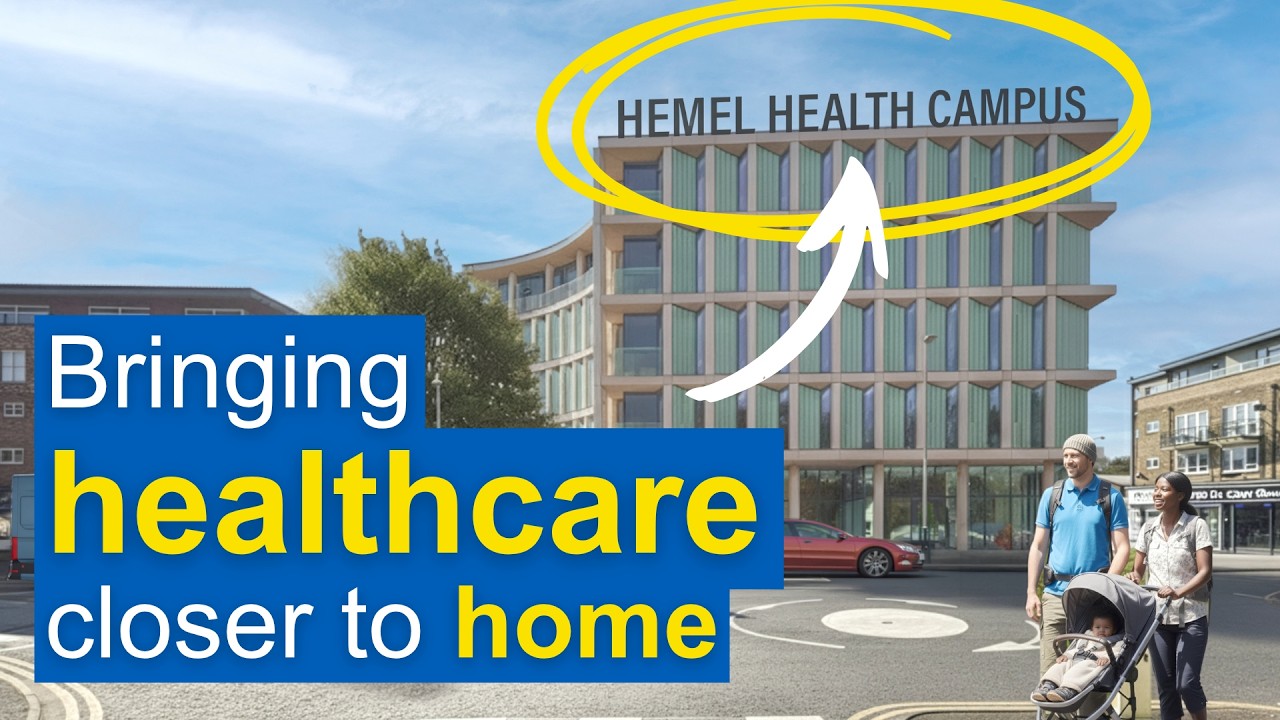
This approach is especially important in south and west Hertfordshire, where more than 100,000 people live with frailty. As people age, they often need support from multiple services at once. Neighbourhood Health brings these services together, helping prevent sudden deterioration of health and avoid unnecessary hospital visits (WATCH: Bringing healthcare closer to home - What is Neighbourhood Health?)
West Herts Trust is working with partners through the South and West Hertfordshire Health and Care Partnership to deliver this model.
In 2025, the Trust launched a £10m partnership with Macmillan Cancer Support and Social Finance to support people who use NHS services most frequently, with the goal of helping them stay well and avoid unnecessary hospital visits.
This group represents around 10% of the population but accounts for the majority of hospital visits. By supporting them more effectively in the community, the NHS can improve their experience while reducing pressure on busy hospital services.
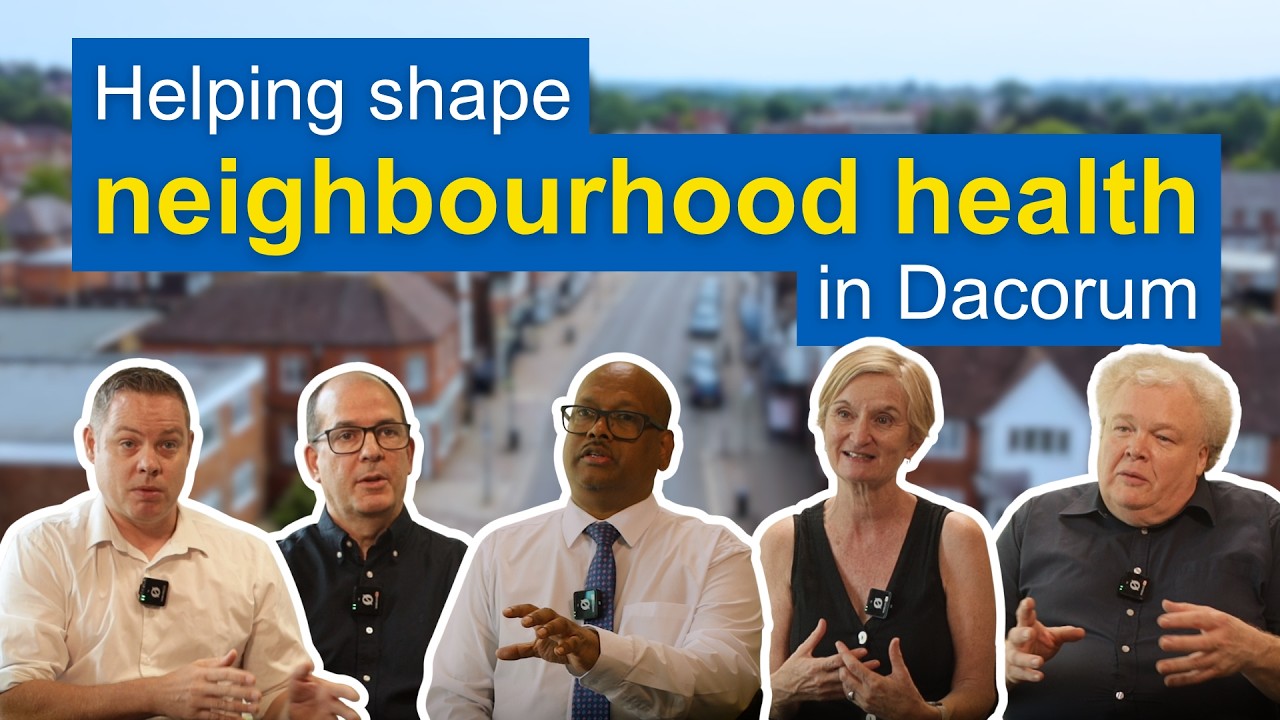
(WATCH: Voluntary and Community leaders explain this change Community voices helping shape neighbourhood health in Dacorum)
Hemel Health Campus - making healthcare easier, closer and more joined-up
The Hemel Health Campus proposal sets out plans for a new, purpose-built neighbourhood health centre in Market Square, Hemel Hempstead, designed to consolidate prevention, outpatient, diagnostic, community, elective, primary care, voluntary sector, social prescribing and same day urgent care services into a single modern, efficient and accessible facility.
The proposals will expand local healthcare and create better health outcomes, not simply relocate services from the existing hospital site.
Over 40% of the existing Hemel hospital site is unoccupied or used inefficiently, resulting in high running costs and limited adaptability. Within the 60% of buildings occupied there is also space used inefficiently as it is not configured for the needs of integrated models of care aligning community, outpatients and diagnostic services.
The proposition
The Hemel Health Campus proposals include a full range of outpatient, diagnostics (X-ray; CT, MRI, Ultrasound, Endoscopy) and Urgent Treatment Centre services.
In the meantime, we are continuing to invest in the existing site, with investment in specialist services such as endoscopy and diagnostics, with extra appointments, improved facilities and the latest, state-of-the-art equipment to help detect cancer earlier.
The existing hospital would continue to remain fully operational until the health campus opens its doors and services move into the new building.
The process
The Hemel Health Campus proposals are progressing through a detailed business case process led by West Herts NHS Trust, working in partnership with local NHS partners and Dacorum Borough Council, to secure the best health outcomes for Dacorum residents.
The proposal is being developed following national guidance for major public projects. This involves a three‑stage business case process, namely: Strategic Outline Case (SOC), Outline Business Case (OBC), and Full Business Case (FBC), which helps ensure that decisions about funding and investment are based on clear evidence.
The project is currently at the Strategic Outline Case (SOC) stage with NHS England and the Department for Health and Social Care.
The Strategic Outline Case set outs the urgent need for a new health campus in Hemel Hempstead to address population growth and an ageing population, increasing health inequalities, and outdated estates infrastructure.
As we proceed to the Outline Business Case, we will continue to work with local people, patient groups, voluntary and community organisations to develop modern, accessible facilities that meet the community’s needs.
Through the Strategic Outline Case (SOC) process, we received valuable feedback on the proposed location of Hemel Health Campus at Market Square, parking provision and the range of services to be provided. We welcome these views and look forward to continuing to engage with the community as we develop our proposals through the Outline Business Case (OBC) stage.
What does this mean for patients?
Residents across West Hertfordshire will benefit from more accessible, coordinated and responsive care. The Trust already performs strongly, currently ranked as the 6th best in England for trusts offering acute, general services, placing it among the best performing NHS trusts nationally.
We are consistently ranked among the top 5 NHS trusts out of 117 Trusts for A&E waiting times (currently no. 2 in the country) and have met all three national cancer targets over the past 20 months. We have also eliminated ‘corridor care’, with zero incidences recorded in 2026 (WATCH: ITV news)
The goal is simple: providing the right care, in the right place, at the right time.
By modernising facilities, strengthening community services and using technology to support people at home, West Herts Trust is building a more sustainable, patient‑centred health system, that helps local people live longer, healthier and more independent lives.
Stay in touch
Sign-up to our monthly stakeholder newsletter for the latest news and information from West Herts NHS Trust, straight to your inbox.
For more information on the Hemel Health Campus project visit West Hertfordshire Teaching Hospitals NHS Trust.