

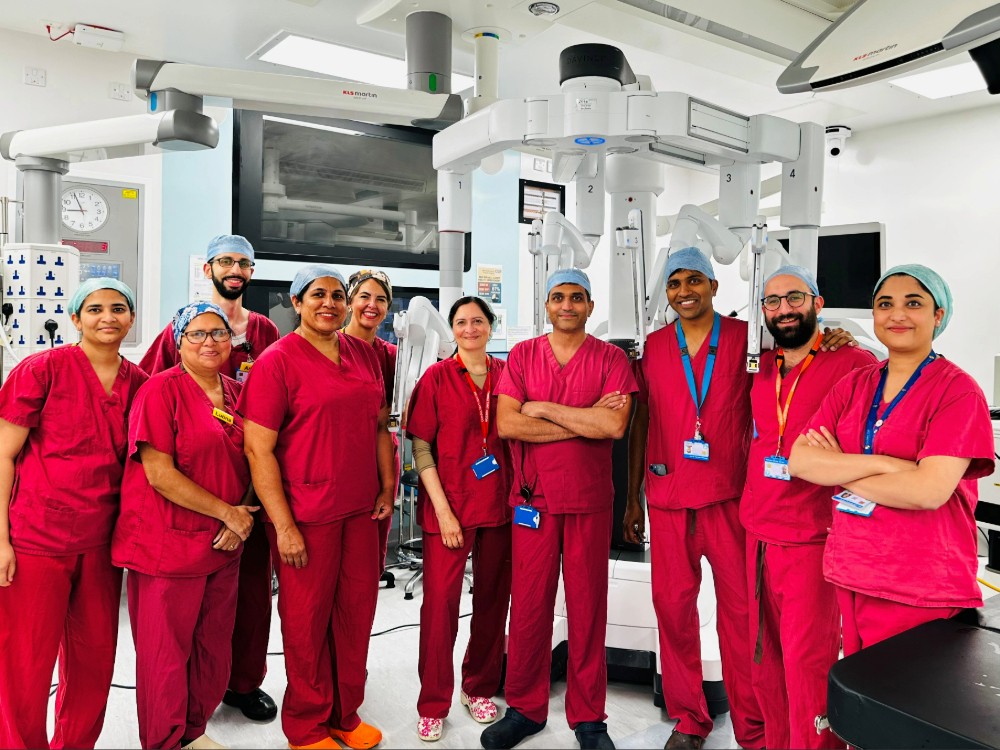
West Herts Teaching Hospitals NHS Trust is showcasing how it is leading the way in modern cancer care, with its colorectal cancer team delivering some of the most innovative treatments available in the country.
To mark World Cancer Day on 4 February, West Herts is highlighting how the combination of digital prehabilitation, robotic surgery and virtual hospital care is giving patients across West Hertfordshire access to some of the most advanced cancer treatment in England.
With one in two people expected to develop cancer during their lifetime, this approach demonstrates how technology, data and innovation can improve recovery, support safer early discharge and deliver more personalised care for patients.
This model of care closely aligns with the ambitions of the National Cancer Plan, launched today, which emphasises faster diagnosis, quicker access to treatment and better health outcomes, helping to position the UK as a world leader in cancer care.
This year’s World Cancer Day theme is “United by Unique”, and West Herts’ colorectal cancer service reflects this, offering a uniquely innovative approach to patient care.
One of the UK’s leading robotic colorectal cancer centres
West Herts a national leader in robotic colorectal cancer surgery, with the Trust performing 135 robotic colorectal cancer resections in the past 12 months. This is more than double the national average of 61 procedures per provider, according to national benchmarking data.
This scale of surgery has enabled a fully embedded robotic colorectal cancer service, delivered by highly trained multidisciplinary teams and aligned with national quality standards.
Equitable access to minimally invasive cancer surgery
All patients on the Trust’s colorectal cancer pathway undergoing minimally invasive colorectal cancer surgery are treated through robotic assisted procedures. This ensures that access to advanced minimally invasive surgery is based on clinical need rather than surgeon availability, subspecialty variation or timing, promoting equitable, consistent care for all eligible patients.
Among the shortest hospital stays in the country
National benchmarking data show that West Herts has some of the shortest hospital stays in England following minimally invasive colorectal cancer surgery.
Only 5.6% of patients experienced a length of stay of nine days or more, which is well below the national average - reflecting the Trust’s leadership in postoperative recovery, supported by a high volume of robotic-assisted procedures.
Digital innovation across the entire cancer pathway
West Herts prides itself on whole-pathway approach to cancer care – using digital prehabilitation to enable patients to improve their physical, nutritional and mental well-being prior to surgery to improve their recovery post-surgery, while the robotic surgery itself, also supports this, as it is much less invasive than traditional techniques.
Some patients are even discharged as early as within 24 hours, as they can be supported through the Trust’s leading Virtual Hospital programme. The Virtual Hospital gives patients the opportunity to be monitored at home, which 24-hour clinical monitoring from Watford General – providing hospital level care from the comfort of their own home.
Patient experience and confidence in care
The patient feedback speaks for itself. Patient satisfaction for the Trust's Virtual Hospital scores exceeded 8.5 out of 10, with more than 90% of patients reporting that they preferred recovering at home with Virtual Hospital support rather than remaining in hospital. Combining virtual care with robotically assisted procedures is proven to positively impact patient experience, while maintaining their safety every step of the way.
Vanash Patel, lead for colorectal cancer pathway describes how the pathway puts patients first:
“The combination of digital technology with high-volume specialist surgery and compassionate care, illustrates how West Herts modern cancer services are proven to provide better outcomes, experiences and use of NHS resources - ensuring that innovation translates into meaningful benefit for patients with cancer.”