Chief Medical Officer

Chief Nurse
The way healthcare services are delivered in England is undergoing major reform and modernisation.
In the following article, clinicians explain these changes, the challenges and opportunities in West Hertfordshire, and what this means for our patients.
The case for change
Many people find today’s NHS hard to navigate, with services spread across different teams and locations. Getting appointments has become increasingly challenging. Whether it’s seeing a GP, accessing diagnostic tests or getting specialist treatment.
These challenges reflect wider pressures on the NHS: an ageing population, more people living with frailty and complex conditions, and buildings that are no longer suited to modern healthcare.
Too often patients only receive care when they reach a crisis point and end up in hospital, which could have been avoided if they had been supported earlier. They can then be discharged without the joined-up care they need to stay well, as services are fragmented and often complex to navigate.
In truth, the system is reactive, driven by short-term needs and built around the services themselves rather than the patients.
That needs to change.
To meet future needs, the NHS will need to strike a balance between delivering specialist emergency care in fewer, better-equipped hospitals and expanding a network of strong local services for planned care, diagnostics and community health.
This approach aims to make care safer, faster and more joined‑up, so patients spend less time waiting and more time receiving the right support.
What’s happening nationally?
In July 2025, the Government published its 10-Year Health Plan for England, “Fit for the Future”, which sets out a major shift in how healthcare will be delivered.
The NHS is moving towards a neighbourhood health model that delivers more care closer to home, focuses on prevention, and uses digital technology to help people manage their health more effectively and independently.
It focuses on three priorities:
- a shift from delivering care in hospitals to delivering care closer to home, in communities and in primary care
- Using digital technology to transform services
- a shift from a service treating sickness to one focused on preventing illness happening in the first place
Neighbourhood health: What does a shift from hospitals to community care mean and why is this important?
A key part of the national plan is the development of Neighbourhood Health services. Across England, up to 250 Neighbourhood Health Centres are planned, with around 120 expected to open by 2030.
Neighbourhood Health Centres will bring together GPs, hospital specialists, community nurses, therapists, social care and voluntary organisations to provide coordinated care closer to home.
This approach is especially important in south and west Hertfordshire, where more than 100,000 people live with frailty. As people age, they often need support from multiple services at once. Neighbourhood Health brings these services together, helping prevent sudden deterioration of health and avoid unnecessary hospital visits.
West Herts Trust is working with partners through the South and West Hertfordshire Health and Care Partnership to deliver this model. In 2025, the Trust also launched a £10m partnership with Macmillan Cancer Support and Social Finance to support people who use NHS services most frequently, with the goal of helping them stay well and avoid unnecessary hospital visits.
This group represents around 10% of the population but accounts for up to 80% of hospital visits. By supporting them more effectively in the community, the NHS can improve their experience while reducing pressure on busy hospital services.
Using digital technology to transform services
Electronic Patient Records (EPRs) are becoming the backbone of NHS digital care, and the NHS App is rapidly evolving into the main “digital front door” for patients, with full integration between the two expected across all trusts by 2026. The NHS App is now one of the most widely used digital health tools in the world.
An EPR is a digital version of a patient’s hospital record. It includes information on diagnoses, medications, test results, treatment history and clinical notes. EPRs allow authorised clinicians to access and update information quickly and securely, reducing errors and improving coordination of care.
They also lay the groundwork for a future single, connected patient record across the NHS.
At West Herts Trust, we have embraced digital technology and innovation to improve patient care.
Together with Central London Community Healthcare (CLCH), we established the UK’s first Virtual Hospital during the Covid-19 pandemic. The Virtual Hospital allows patients to receive specialist care at home using remote monitoring devices and through dedicated clinical support, with a patient satisfaction score of 9.2/10.
The Virtual Hospital now support patients with conditions including heart failure, chronic obstructive pulmonary disease and respiratory infections.
The Trust has also invested heavily in robotic surgery, establishing one of Europe’s most advanced robotic centres at Watford General Hospital. Robotic technology allows surgeons to perform highly precise, minimally invasive operations. Many cancer patients can now return home within 24 hours, compared with around five days previously, with quicker recovery and fewer complications.
The challenges and opportunities in West Hertfordshire
The Trust provides healthcare services for more than 600,000 people living in Hemel Hempstead, St Albans, Watford and surrounding areas.
We see nearly a million patients every year and employ around 5,800 staff, making the Trust one of the largest employers in the area.
We operate three main sites, each with a specific purpose but all working together as one integrated healthcare system. Watford General Hospital is the Trust’s specialist emergency care site and is set for major redevelopment, with government funding secured for a new hospital.
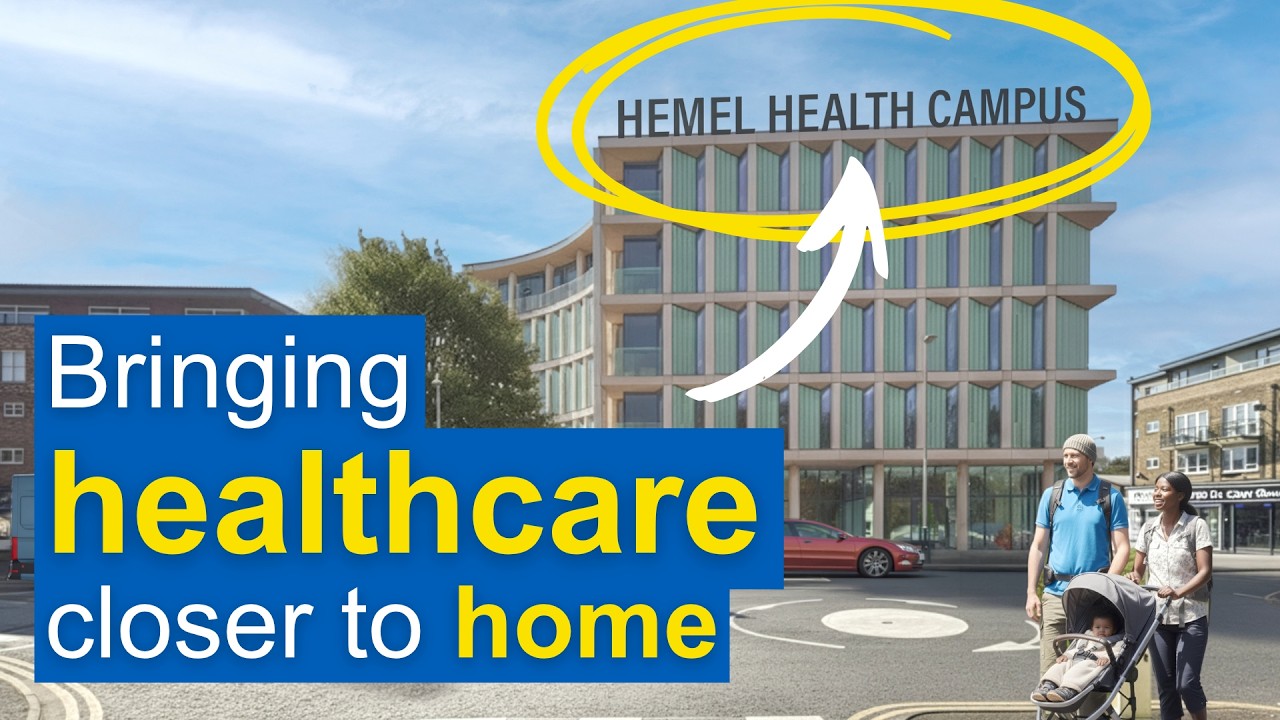
Hemel Hempstead is the Trust’s centre for planned community‑based care, with proposals for a new Neighbourhood Health Centre in the town centre. The Health Campus will incorporate a portfolio of diagnostic services including MRI and CT scanners, an Endoscopy Suite, integrated primary, community, secondary care and mental health services and an urgent treatment centre.
St Albans City Hospital is the Trust’s elective care hub, with over £100m being invested to expand diagnostic and surgical capacity. A new Community Diagnostics Centre, a four‑theatre surgical centre and a modern endoscopy unit will significantly increase planned care activity and reduce waiting times.
Each site plays a different role, but collectively they provide the full range of healthcare services for the people of West Hertfordshire, from emergency treatment to diagnostics, surgery, community services and specialist care.
The Trust’s redevelopment plans represent a once-in-a-generation opportunity to transform care in West Hertfordshire. Success depends on changing how we work now, so we can make the most of state-of-the-art facilities, smart technology, and improved diagnostics.
Our Clinical Strategy (2025-2030) sets the direction for this transformation, ensuring our estates are the right size and services are designed for the future.
What does this mean for patients?
Residents across West Hertfordshire will benefit from more accessible, coordinated and responsive care. The Trust already performs strongly, consistently ranking among the top 10 NHS trusts out of 122 Trusts for A&E waiting times, and meeting all three national cancer targets over the past year.
The goal is simple: providing the right care, in the right place, at the right time.
By modernising facilities, strengthening community services and using technology to support people at home, West Herts Trust is building a more sustainable, patient‑centred health system, that helps local people live longer, healthier and more independent lives.